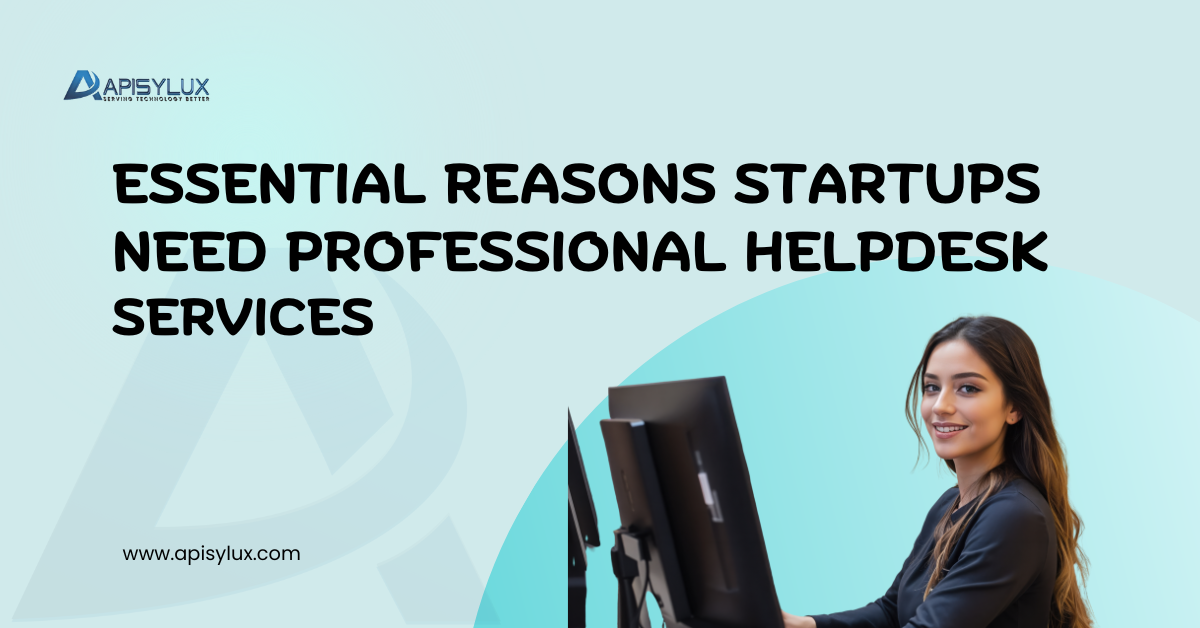
For startups and small businesses, every minute of downtime and every unresolved IT issue directly impacts revenue, reputation, and growth. In a fast-moving market, relying on ad hoc fixes or “the one IT guy” is no longer sustainable. This is where professional helpdesk services become a game changer, giving smaller teams enterprise-grade IT support without the cost of a full in-house department.
What Are Professional Helpdesk Services?
Professional helpdesk services provide a centralized, structured way to handle technical issues, requests, and incidents across your business. Instead of scattered chats and phone calls, you get a formal support layer that uses ticketing systems, clear workflows, service level agreements (SLAs), and well-trained technicians to resolve issues efficiently.
Need help with Helpdesk?
Get a free strategy session with our experts — no commitment required.
A modern helpdesk acts as a single point of contact for IT problems, user questions, and service requests. It consolidates information, standardizes processes, and improves communication between your team and the people managing your technology, which leads to faster and more accurate issue resolution.[1]
Why Startups and Small Businesses Struggle Without Professional Helpdesk Services
Most startups and small businesses begin with improvised IT support. A tech-savvy founder, a developer, or an external freelancer “handles IT” when something breaks. That might work in the early days, but it quickly becomes a problem when:
- Your team grows and more people need fast, reliable support
- You adopt multiple tools, cloud services, and devices
- Security, compliance, and data protection become critical
- Customers expect fast responses and minimal downtime
Without professional helpdesk services, requests fall through the cracks, problems are solved in a reactive way, and you never get proper visibility into recurring issues, root causes, or overall support performance.
1. Professional Helpdesk Services Reduce Costs and Hiring Risk
For a small company, hiring a full in-house IT team is often unrealistic. You have salaries, benefits, training, and tool costs to consider. Professional helpdesk services give you access to a full team of experienced technicians without the overhead of building that capability internally.
Instead of paying for multiple IT roles, you pay for a predictable service package that covers day-to-day support, troubleshooting, and guidance. This model is especially attractive to startups and SMEs that need reliable IT support but want to stay lean and protect cash flow.[2]
If you are already considering outsourcing IT, you can connect IT outsourcing and help desk support as a single strategy to keep your technology environment efficient and cost effective.
2. Professional Helpdesk Services Improve Productivity and Uptime
Lost passwords, VPN issues, software errors, and printing problems might look small, but they add up to serious productivity loss over time. Professional helpdesk services are built to reduce this friction by providing clear channels for support, standardized processes, and faster resolutions.
Best practice helpdesk setups rely on centralized ticketing, knowledge bases, and automation so issues are logged, prioritized, and resolved efficiently.[3] That means your team spends less time fighting tools and more time building products, serving customers, and growing the business.
For example, if a startup uses Apisylux Helpdesk Service, employees can reach IT specialists directly via ticketing or chat instead of waiting for someone internally to “get to it later.” The result is fewer bottlenecks and smoother daily operations.
3. Professional Helpdesk Services Enhance Customer Experience
Your helpdesk is not just an internal function. When systems go down, emails fail, or your website misbehaves, customers feel it. For startups and small businesses, a few bad experiences can damage trust quickly.
Professional helpdesk services help maintain a reliable customer experience by:
- Reducing downtime for customer-facing systems
- Ensuring faster response when critical tools or integrations fail
- Supporting your team so they can respond to customer queries with confidence
Better internal support naturally translates into more consistent external service. Some helpdesk providers also support customer-facing channels, which means they can centralize and streamline both employee and client support in a single environment.[4]
4. Professional Helpdesk Services Strengthen Security and Compliance
Startups and small businesses often underestimate how much risk they carry. Weak passwords, unsecured devices, unpatched systems, and shadow IT quickly become entry points for attacks. Professional helpdesk services bring structure and discipline to your IT environment.
A mature helpdesk setup can help with:
- Standardized onboarding and offboarding of employees
- Consistent application of security policies and updates
- Access control and permission management
- Backup, recovery, and incident response coordination
Providers who combine helpdesk with managed IT and outsourcing can go a step further by offering proactive monitoring, security hardening, and regular reviews. If your business is in the UAE, for example, you can align this with IT outsourcing services for SMEs and startups to build a robust foundation from day one.
5. Professional Helpdesk Services Scale With Your Growth
As your startup lands more customers, hires more staff, and expands into new locations, your IT support needs grow as well. Scaling an internal IT team is expensive and slow, while scaling professional helpdesk services is usually as simple as upgrading your service level or adding more covered users.
Modern helpdesk platforms are built to handle increased ticket volume, new tools, and new business units without losing control. With the right provider, you maintain consistent processes, reporting, and service quality as your company grows instead of constantly reinventing your IT support model.
How to Choose the Right Professional Helpdesk Services Provider
Not all professional helpdesk services are created equal. When evaluating providers for your startup or small business, pay attention to:
- 24/7 availability: Especially important if you work across time zones or run online services.
- Response and resolution times: Clear SLAs and realistic commitments, not vague promises.
- Experience with startups and SMEs: Providers who understand lean teams and rapid change.
- Tooling and integrations: Ticketing systems, chat, monitoring tools, and integrations with your existing stack.
- Transparent pricing: Easy to understand, with no hidden costs per ticket or per incident.
It is also helpful to choose a provider that can grow with you across other areas of technology. For example, if your startup also needs digital marketing and SEO support, consolidating vendors can reduce complexity and ensure your infrastructure and growth plans stay aligned.
Final Thoughts: Professional Helpdesk Services as a Strategic Advantage
For startups and small businesses, technology can either be a competitive advantage or a constant source of frustration. Professional helpdesk services tilt the balance in your favor by delivering structured, predictable, and scalable IT support without the overhead of building a full internal team.
By reducing costs, improving productivity, protecting your reputation, and supporting long-term growth, a modern helpdesk is no longer a “nice to have.” It is a core part of running a resilient, high-performing business in 2025 and beyond.
If you are ready to give your team direct access to expert IT support without hiring an in-house department, explore the dedicated Helpdesk Service from Apisylux and see how it can fit into your broader IT and growth strategy.